


探討有機(jī)錫T-9催化劑與胺類催化劑并用對聚氨酯發(fā)泡初期反應(yīng)速率的影響力
The importance of reaction rate in the initial stage of polyurethane foaming
Polyurethane (PU) is a high-performance material widely used in construction, automobiles, home appliances, packaging and other fields. Its excellent performance comes from its unique chemical structure and processing technology. In the production process of polyurethane, foaming is a key step, and the reaction rate in the early stage of foaming directly affects the quality of the final product. The reaction rate in the initial stage of foaming determines the foam formation speed, bubble distribution uniformity and foam density. These factors jointly affect the mechanical properties, thermal insulation performance and appearance quality of the material. For example, if the reaction rate is too fast, it may result in uneven bubbles or a high foam closed cell ratio, thereby reducing the flexibility and insulation effect of the material; conversely, if the reaction rate is too slow, it may make the foam structure unstable, leading to collapse or surface defects.
In order to control the reaction rate in this critical stage, the choice of catalyst is crucial. Catalysts can significantly accelerate the chemical reaction between isocyanates and polyols, and at the same time promote gas release during the foaming process. Among many catalysts, organotin T-9 and amine catalysts have attracted much attention due to their high efficiency and controllability. Organotin T-9 is a commonly used gel-type catalyst that mainly promotes the cross-linking reaction between isocyanate and hydroxyl groups, thereby enhancing the strength and stability of foam; while amine catalysts are known for their excellent foaming ability and can effectively adjust the foaming rate and foam shape. However, it is often difficult for a single catalyst to meet complex process requirements, so the combination of two catalysts has become a common strategy. By properly matching these two catalysts, not only can the initial reaction rate of foaming be optimized, but the foam performance can also be precisely controlled. This combined effect provides an important way to improve the quality of polyurethane products and also brings greater flexibility to industrial production.
The mechanism and characteristics of organotin T-9 catalyst
Organotin T-9 catalyst is a compound based on dibutyltin dilaurate, whose molecular structure gives it unique catalytic properties. In the polyurethane foaming reaction, T-9 mainly works by promoting the cross-linking reaction between isocyanate (NCO) and polyol (OH). Specifically, the tin center of T-9 can form a coordination bond with the isocyanate group, thereby reducing the reaction activation energy and significantly accelerating the cross-linking reaction. This mechanism of action makes T-9 particularly suitable for polyurethane foam systems that require high strength and stability, as it not only increases the reaction rate but also enhances the mechanical properties and durability of the foam.
From an application perspective, the advantage of T-9 lies in its efficient gel catalytic ability. In the early stages of foaming, T-9 can quickly start the cross-linking reaction to ensure the timely formation of the foam skeleton, which is crucial to preventing foam collapse and maintaining uniform bubble distribution. In addition, T-9 also exhibits good thermal and chemical stability and can maintain catalytic activity over a wide temperature range, which makes it highly reliable in actual production. However, the limitations of the T-9 are alsoIt cannot be ignored. First of all, its catalytic selectivity is strong and it mainly promotes gel reactions, while its promotion effect on foaming reactions is relatively weak. This means that using T-9 alone may result in insufficient foaming rate, which in turn affects the molding efficiency and density control of the foam. Secondly, the price of T-9 is relatively high, and due to its tin content, its use is subject to certain restrictions in the context of increasingly stringent environmental regulations.
In summary, organotin T-9 catalyst occupies an important position in the field of polyurethane foaming due to its efficient gel catalytic ability and stable performance. However, its catalytic selectivity and cost issues have also prompted researchers to explore the synergistic use with other catalysts to make up for its shortcomings and further optimize the foaming process.
The mechanism and characteristics of amine catalysts
Amine catalyst is another important type of catalytic system in the polyurethane foaming process. Its core function is to promote the reaction between isocyanate and water, thereby accelerating the generation of carbon dioxide gas and promoting the expansion and formation of foam. Amine catalysts usually contain primary, secondary or tertiary amine groups, which can activate isocyanate groups through a proton transfer mechanism and significantly reduce the reaction activation energy. Specifically, amine catalysts can preferentially combine with water molecules to form reactive intermediates, which then react with isocyanates to form carbamates and release carbon dioxide gas. This efficient gas release mechanism makes amine catalysts play an indispensable role in the foaming reaction.
From an application perspective, the main advantage of amine catalysts is their excellent foaming ability. They can quickly start the foaming reaction and ensure that the foam reaches the required volume and density in a short time, which is particularly important for improving production efficiency and reducing energy consumption. In addition, there are many types of amine catalysts, including triethylenediamine (TEDA), bis(2-dimethylaminoethyl)ether (BDMAEE), etc. Each catalyst has different activity and selectivity, which provides great flexibility for formulation design. For example, certain amine catalysts can precisely control the foaming rate by adjusting the dosage to adapt to the needs of different process conditions.
However, amine catalysts also have certain limitations. First, they are sensitive to environmental humidity and temperature, and are prone to fluctuations in catalytic activity due to changes in external conditions, which may affect the quality stability of the foam. Secondly, amine catalysts are highly volatile, and some varieties will decompose or escape under high temperature conditions, which not only reduces the catalytic efficiency, but may also cause potential harm to the health of operators and the environment. In addition, when the amine catalyst is used alone, its promotion effect on the gel reaction is relatively weak, which may cause the formation of the foam skeleton to lag, thereby affecting the mechanical properties and dimensional stability of the foam.
In summary, amine catalysts play an important role in the polyurethane foaming process with their strong foaming ability and diverse selectivity. However, its sensitivity to external conditions and limited contribution to gel reactions have also prompted researchers to compare it with organicTin catalysts are used in combination to achieve more comprehensive performance optimization.
The synergistic effect of using organotin T-9 and amine catalysts
When organotin T-9 catalyst and amine catalyst are used together, the two show a significant synergistic effect. This effect can effectively optimize the reaction rate in the early stage of polyurethane foaming and improve the overall performance of the foam. The core mechanism of this synergy lies in the functional complementarity of the two catalysts: Organotin T-9 mainly promotes the cross-linking reaction between isocyanate and polyol, while the amine catalyst focuses on accelerating the reaction of isocyanate and water, thereby promoting gas release and foam expansion. The combination of the two not only achieves the simultaneous coordination of the foaming reaction and the gel reaction, but also significantly improves the controllability of the reaction rate and the uniformity of the foam structure.
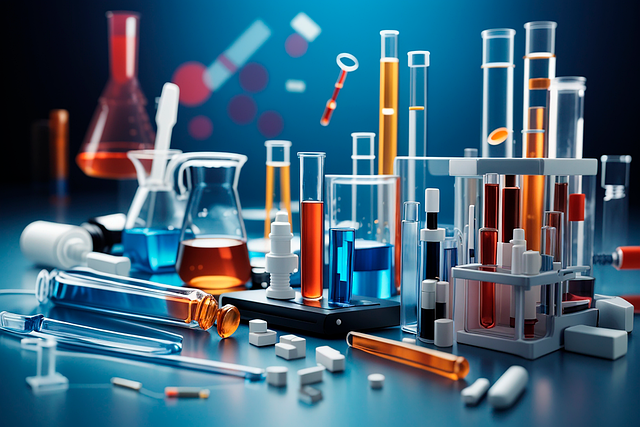
Specifically, amine catalysts quickly start the reaction between isocyanate and water in the early stages of foaming, generating a large amount of carbon dioxide gas and promoting the rapid expansion of the foam. At the same time, the organotin T-9 catalyst ensures the timely formation of the foam skeleton by promoting the cross-linking reaction between isocyanate and polyol, and avoids foam collapse or structural instability caused by excessive gas release. This catalytic mechanism with clear division of labor makes the foaming process more efficient and stable. More importantly, the presence of organotin T-9 can moderately inhibit the excessive foaming effect of amine catalysts, thereby avoiding loss of control of the reaction rate and ensuring uniformity of foam density and bubble distribution. This mutually restrictive and complementary relationship enables the combined use of the two catalysts to achieve precise control of the reaction rate in the early stages of foaming.
In addition, the synergistic effect of organotin T-9 and amine catalysts is also reflected in the comprehensive improvement of foam performance. On the one hand, the efficient foaming ability of the amine catalyst ensures the low density and high thermal insulation performance of the foam; on the other hand, the gel catalysis of organotin T-9 enhances the mechanical strength and durability of the foam. This dual role enables the final polyurethane foam to not only have excellent physical properties, but also meet the needs of different application scenarios. For example, in the field of building insulation, the application of this combined catalyst can significantly improve the insulation effect and compressive strength of foam, thereby extending the service life of the material.
In summary, the combined use of organotin T-9 and amine catalysts not only optimizes the reaction rate in the early stages of foaming through functional complementation and synergy, but also significantly improves the structure and performance of the foam. This combined strategy provides higher flexibility and reliability for the polyurethane foaming process, bringing significant technical advantages to industrial production.
Parameter comparison: Performance differences between organotin T-9 and amine catalysts
In order to more intuitively understand the performance differences between organotin T-9 catalysts and amine catalysts in the initial reaction of polyurethane foaming, the following table detailsThe catalytic efficiency, scope of application and specific impact on foam performance of the two are listed. Through comparative analysis, their advantages and disadvantages in practical applications can be better revealed.
| Parameter category | Organotin T-9 Catalyst | Amine Catalyst |
|---|---|---|
| Catalytic efficiency | Mainly promotes gel reactions, with moderate catalytic efficiency and stable reaction rate | Mainly promotes foaming reaction, with high catalytic efficiency and fast reaction rate |
| Scope of application | Suitable for foam systems requiring high strength and stability | Suitable for foam systems that require rapid foaming and low density |
| Effect on foam density | Increase foam density and enhance the stability of foam skeleton | Reduce foam density and increase foam expansion |
| Effects on foam uniformity | The bubble distribution is relatively uniform and the foam structure is dense | Bubble distribution is easily affected by external conditions, and the foam structure is loose |
| Effect on foam strength | Significantly improve the mechanical strength and durability of foam | The contribution to foam strength is small and other catalysts are needed |
| Sensitivity to the environment | Strong stability, not sensitive to humidity and temperature changes | Relatively sensitive to environmental humidity and temperature, and the catalytic activity is easy to fluctuate |
| Cost and environmental protection | The cost is higher, and tin-containing ingredients may be subject to environmental regulations | The cost is low, but some varieties are highly volatile and have poor environmental protection |
As can be seen from the table, although the catalytic efficiency of the organotin T-9 catalyst is not as fast as that of the amine catalyst, its stability and improvement in foam strength make it more advantageous in scenarios that require high quality foam. In contrast, amine catalysts are more suitable for foam systems that pursue low density and rapid prototyping due to their efficient foaming capabilities. However, the sensitivity of amine catalysts to external conditions and their insufficient contribution to foam strength limit the possibility of their sole use.
This parameter comparison clearly demonstrates the performance differences of the two catalysts in different dimensions. It is difficult for any catalyst to meet the needs of complex processes when used alone, but when the two are used in combination, they can achieve synergy through complementary functions.Precisely control the initial reaction rate of the foam while taking into account key performance indicators such as density, uniformity and strength of the foam. This synergy provides theoretical basis and technical support for optimizing the polyurethane foaming process.
Conclusion and Outlook: Future Development Directions of Catalyst Combinations
Through the study of the combined use of organotin T-9 catalysts and amine catalysts, we can clearly see that this combination strategy shows significant advantages in optimizing the initial reaction rate of polyurethane foaming. Through functional complementation and synergy, the two not only improve the controllability of the foaming reaction, but also significantly improve the density, uniformity and mechanical properties of the foam. This technological breakthrough has laid a solid foundation for the wide application of polyurethane materials in construction, automobiles, home appliances and other fields.
However, there are still some challenges and unanswered questions in current research. First, although the catalyst combination can effectively balance the foaming and gelation reactions, how to further optimize the ratio of catalysts to adapt to different application scenarios still requires in-depth exploration. Secondly, the volatility and environmental sensitivity of amine catalysts have not yet been fully resolved, which may have a certain impact on the stability and environmental protection of the production process. In addition, as global environmental regulations become increasingly stringent, the development of new catalysts with low toxicity and low volatility has become a key issue that needs to be solved.
Looking to the future, catalyst research and development should focus on the following aspects: First, develop composite catalysts with higher selectivity and stability to achieve precise control of foaming reactions and gel reactions; second, explore synthesis routes for green catalysts to reduce potential harm to the environment and health; third, combine artificial intelligence and big data technology to establish catalyst performance prediction models, thereby accelerating the development of new materials. Through these efforts, we are expected to further promote the innovation of polyurethane foaming technology and inject new vitality into the sustainable development of the industry.
====================Contact information=====================
Contact: Manager Wu
Mobile phone number: 18301903156 (same number as WeChat)
Contact number: 021-51691811
Company address: No. 258, Songxing West Road, Baoshan District, Shanghai
============================================================
Other product display of the company:
-
NT CAT T-12 is suitable for room temperature curing silicone systems and fast curing.
-
NT CAT UL1 is suitable for silicone systems and silane-modified polymer systems, with medium catalytic activity and slightly lower activity than T-12.
-
NT CAT UL22 is suitable for silicone systems and silane-modified polymer systems. It has higher activity than T-12 and excellent hydrolysis resistance.
-
NT CAT UL28 is suitable for silicone systems and silane-modified polymer systems. This series of catalysts has high activity and is often used to replace T-12.
-
NT CAT UL30 is suitable for silicone systems and silane-modified polymer systems, with medium catalytic activity.
-
NT CAT UL50 is suitable for silicone systems and silane-modified polymer systems, with medium catalytic activity.
-
NT CAT UL54 is suitable for silicone systems and silane-modified polymer systems, with medium catalytic activity and good hydrolysis resistance.
-
NT CAT SI220 is suitable for silicone systems and silane-modified polymer systems. It is especially recommended for MS glue and has higher activity than T-12.
-
NT CAT MB20 is suitable for organobismuth catalysts and can be used in organic silicon systems and silane-modified polymer systems. It has low activity and meets the requirements of various environmental protection regulations.
-
NT CAT DBU is suitable for organic amine catalysts and can be used for room temperature vulcanization silicone rubber to meet various environmental protection regulations.